
Chiropractic Care
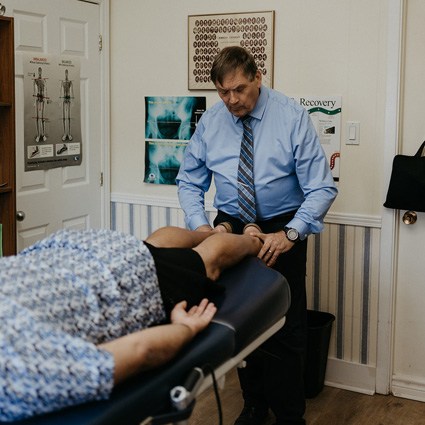 Stiffness, tension, or reduced mobility can make everyday activities harder than they need to be. For more than two decades, people of all ages throughout Bowmanville and Clarington have turned to Baarbé Chiropractic Centre for chiropractic care. Whether your symptoms are new or have been building over time, an assessment can help identify what may be involved and what next steps may be appropriate.
Understanding Your Care
People arrive with all sorts of ideas about chiropractic, especially if they’ve never been to a chiropractor before. Dr. Johannes Baarbé starts by asking what you already know and what questions or concerns you have. From there, he explains what he finds, what he recommends, and why, so you can better understand your care. Chiropractic care focuses on the spine, joints, and how well your body moves and functions. The spine also houses and protects the spinal cord, an important part of the nervous system. Researchers continue to study the relationship between spinal function, the brain, and nervous system activity.
A Low-Force, Instrument-Assisted Approach
Dr. Baarbé primarily uses two instrument-assisted approaches: Activator Methods® and the Impulse iQ®. Activator Methods uses a small handheld instrument to apply a controlled force, while the Impulse iQ is a computer-assisted adjusting instrument. The approach used depends on your assessment findings and individual needs. Neither involves the manual twisting, cracking, or popping that some people associate with chiropractic care. Our chiropractor has used the Activator Methods protocol for more than 25 years and is certified in the use of the Impulse iQ instrument.
Reasons People Seek Chiropractic Care
People seek chiropractic care for different reasons. Some have stiffness or changes in mobility, while others want to maintain their movement and function as they get older or continue doing the activities that matter to them. Dr. Baarbé has a particular interest in the neurological research surrounding chiropractic care. Research by Dr. Heidi Haavik and colleagues, for example, has examined changes in brain and nervous system activity following chiropractic adjustments. This remains an area of ongoing study, and research findings don’t mean that every person will experience the same response. People who visit the practice include those experiencing or navigating:
- Neck or back stiffness and tension
- Musculoskeletal factors that may be associated with certain headaches
- Reduced mobility or joint stiffness
- Musculoskeletal concerns following a motor vehicle accident or workplace injury
- Changes in comfort or mobility during pregnancy
- Different movement and mobility needs throughout childhood and older adulthood
Care recommendations are based on your health history, examination findings, concerns, and goals rather than a one-size-fits-all plan.
Looking Beyond the Spine
Sometimes other mechanical factors may be relevant to what is happening elsewhere in the body. When appropriate, Dr. Baarbé may assess how the feet are functioning and discuss custom orthotics as an additional option. Foot mechanics can affect how forces travel through the lower limbs and may be relevant when evaluating concerns involving areas such as the knees, hips, or lower back. Education is also part of the experience. We take time to explain the reasoning behind our recommendations and can share educational resources for patients who would like to learn more about chiropractic and the research surrounding it.
Frequently Asked Questions
Will my adjustment involve twisting or cracking?
Is chiropractic care only for people with back or neck discomfort?
Do you see children and older adults?